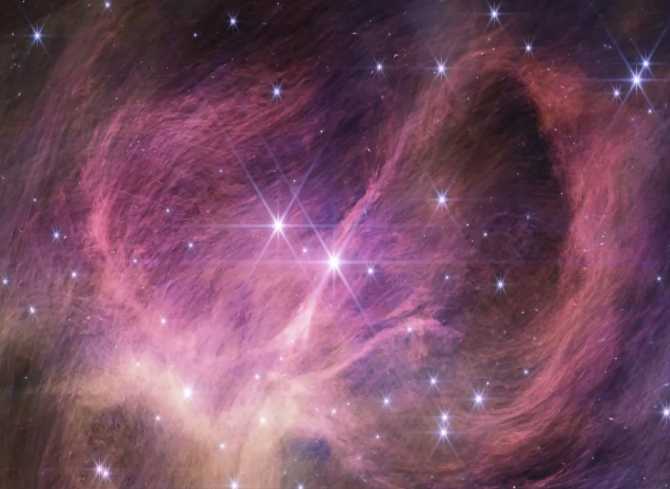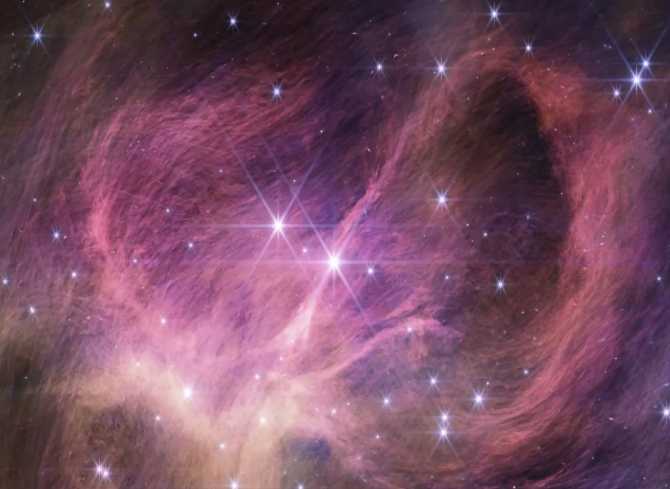
The James Webb Space Telescope (JWST), humanity’s most powerful observatory, has uncovered the smallest brown dwarf ever detected—a celestial "failed star" with a mass just 3 to 4 times that of Jupiter. This diminutive object, located in the IC 348 star cluster within the Perseus constellation (~1,000 light-years from Earth), challenges long-held theories about the minimum mass required for star formation. The discovery, led by astronomers Kevin Luhman (Pennsylvania State University) and Catarina Alves de Oliveira (ESA), reveals a cosmic frontier where stars and planets blur into ambiguity.
The IC 348 star cluster, a youthful stellar nursery only ~5 million years old, provided the perfect backdrop for this breakthrough. Young star-forming regions like IC 348 host embryonic stars still accumulating mass, making them ideal for spotting low-mass objects like brown dwarfs. Using JWST’s NIRCam (Near-Infrared Camera), the team imaged the cluster’s core, leveraging the instrument’s sensitivity to infrared light—a crucial advantage for detecting faint, cool objects like brown dwarfs.
Source: Images from the Internet, if there is any infringement, please contact the removal of
The search focused on three candidate targets identified through their brightness and color signatures. By analyzing their spectral properties, the team determined their masses (3–8 Jupiter masses) and surface temperatures (830–1,500°C). The smallest object, with a mass of just 3–4 Jupiters, pushes the boundaries of what astronomers thought possible for brown dwarfs. These findings suggest that star formation can produce objects far smaller than the previously accepted theoretical limit of ~13 Jupiter masses 13.
Brown dwarfs, often called "failed stars," lack the mass to sustain hydrogen fusion but can briefly fuse deuterium. The IC 348 discovery challenges the traditional understanding of their formation. Computer models indicate that such low-mass objects might form through gravitational collapse in molecular clouds, similar to stars, but with truncated mass accretion 8. Alternatively, they could be ejected from protostellar disks during chaotic interactions in dense star clusters 6.
The implications extend beyond IC 348. Other teams using JWST have reported similar findings: a 5-Jupiter-mass brown dwarf in NGC 1333 and a 3-Jupiter-mass object in the Orion Flame Nebula 1. These discoveries collectively suggest that brown dwarfs may be more common and diverse than previously believed. However, some astronomers remain cautious, noting that objects below 13 Jupiter masses could theoretically be free-floating planets—a distinction that requires further spectroscopic analysis to resolve 36.
JWST’s NIRCam and micro-shutter array technology were pivotal in this discovery, enabling precise tracking of faint targets while blocking out glare from brighter stars. The telescope’s infrared capabilities also revealed details about the brown dwarfs’ atmospheres, such as the presence of methane and water vapor—a rarity in such low-mass objects 7.
Looking ahead, astronomers plan to study these brown dwarfs’ evolution and search for planetary companions. The team has already applied for additional JWST observing time to explore whether these "miniature stars" host their own orbiting worlds. As Webb peers deeper into star-forming regions, it continues to redefine our understanding of cosmic boundaries—proving that even the smallest celestial objects can hold monumental clues to the universe’s mysteries.