Scarab Beetles (Scarabaeidae): Jewels of the Insect World


Insect Information
Scarab Beetles (Scarabaeidae): Jewels of the Insect World

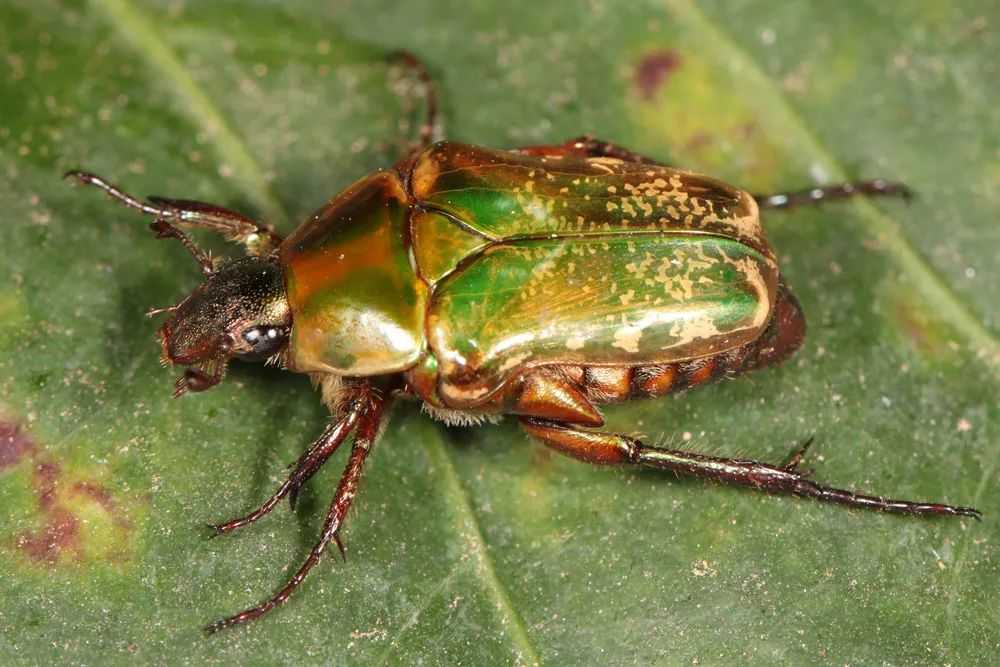
Scarab beetles, comprising the family Scarabaeidae, are a diverse group of coleopterans renowned for their often iridescent exoskeletons, distinctive morphology, and ecological significance. With over 30,000 species worldwide, they inhabit almost every terrestrial ecosystem, from deserts to rainforests.
Morphological Traits

  • Body Structure: Most scarabs have a robust, oval-shaped body with a domed pronotum and hardened elytra (wing covers). Sizes range from 1 mm to over 15 cm (e.g., Goliathus species).
  • Antennae: Unique "lamellate" antennae, ending in segmented, leaf-like plates that detect odors.
  • Sexual Dimorphism: Males often bear elaborate horns or projections on the head and thorax (e.g., rhinoceros beetles), used in mating competitions.

Life Cycle & Behavior

  1. Egg to Adult: Females lay eggs in soil, decaying organic matter, or animal dung. Larvae (grubs) are C-shaped, white, and inhabit soil or detritus, feeding on roots,or dung. They pupate in earthen cells before emerging as adults.
  2. Feeding Habits:
    • Dung Beetles: Specialized species (e.g., Scarabaeus) roll dung into balls for nesting and food, earning them the title "ecosystem engineers."
    • Leaf Chafers: Adults feed on leaves, flowers, or fruit (e.g., Japanese beetles, Popillia japonica), while larvae damage plant roots.
    • Stag Beetles: Some adults have enlarged mandibles but feed little; larvae decompose wood.
  3. Nocturnal & Diurnal Species: Many are active at night (e.g., June bugs), while others (e.g., flower chafers) fly during the day.

Ecological Roles

  • Decomposers: Dung beetles accelerate nutrient cycling by burying dung, reducing parasite populations and enriching soil.
  • Pollinators: Flower-visiting scarabs (e.g., Euphoria) aid plant reproduction, especially in tropical regions.
  • Food Source: Larvae and adults serve as prey for birds, mammals, and other insects.

Cultural & Economic Significance

  • Symbolism: In ancient Egypt, the dung beetle (Scarabaeus sacer) was a symbol of rebirth and the sun god Ra, with carved scarab amulets representing protection.
  • Pests & Benefits: Some species (e.g., white grubs) damage crops and lawns, while others (e.g., dung beetles) are used in biological control to manage livestock waste.
  • Biodiversity Indicators: Scarab diversity reflects ecosystem health, making them key species in environmental studies.
Latest Stories
Health News1 minute readMeasles is an acute rash-causing respiratory infection caused by the measles virus. It spreads primarily through respiratory droplets and eye conjunctiva contact, making it one of the most contagious diseases. Typical symptoms include fever, runny nose, cough, tearing, photophobia, and maculopapular rashes. A small number of patients may develop complications such as pneumonia, laryngitis, otitis media, myocarditis, or encephalitis, with severe cases potentially leading to death.
Travel News2 minute readThe soul of Colmar lies in its half-timbered houses, dating back to the 16th century. These whimsical structures feature exposed wooden frames in geometric patterns, their facades painted in vibrant hues like buttercup yellow and sky blue. Flower-boxed windows and playful figurines adorn the facades, while their reflections dance on the Lauch River, creating the iconic Petite Venise (Little Venice) district. Here, fishermen pilot flower-decked boats, and riverside bistros serve Alsatian specialties like choucroute garnie, evoking scenes from Hayao Miyazaki’s Howl’s Moving Castle.
Health News1 minute readLocated in Pittsburgh, Pennsylvania, the UPMC Mercy Eye & Vision Rehabilitation Hospital spans 38,090 square meters. It integrates architectural design, engineering, interior design, landscape design, structural engineering, and sustainable design, earning it the 2023 Urban Land Institute (ULI) Healthier Places Award.
Health News1 minute readThough less internationally renowned, BNH Hospital stands as another top choice among Thailand’s international hospitals. As the country’s oldest private international hospital, it has served foreign patients longer than any other facility in the region.
Health News1 minute readNestled in a sheltered bay on the eastern shore of Lake Geneva in Switzerland’s Vaud canton, the town of Montreux is framed by the snow-capped Alps, boasting breathtaking scenery. Long celebrated as a wellness retreat with a mild, pleasant climate, it covers 41 square kilometers and is home to around 23,000 residents—an idyllic small town known globally as a "mecca for beauty" and "capital of medical wellness."
Astro Information2 minute readOn a clear, moonless night, a faint band stretches across the sky, gradually resolving into a luminous ribbon as eyes adjust to the dark. This is no ordinary sight: it’s the Milky Way, a grand projection of our galaxy’s 千亿 stars. The galactic plane arcs elegantly across the frame, flanked by the colorful Rho Ophiuchi Nebula on the right and the red-ringed Zeta Ophiuchi Nebula at the top center. Taken in late February from Mauna Kea, Hawaii, the image features the University of Hawaii’s 2.2-meter telescope in the foreground—though you don’t need a volcanic summit to witness this cosmic wonder.
Astro Information2 minute readA Sino-German research team led by the Yunnan Observatory of the Chinese Academy of Sciences has discovered a "super-Earth" orbiting a Sun-like star, marking a breakthrough in exoplanet detection. Named Kepler-725c, the planet has a mass 10 times that of Earth and resides in the habitable zone of its host star, where liquid water—and potentially life—could exist. The findings, published June 3 in Nature Astronomy, represent the first use of transit timing variation (TTV) inversion to identify such a planet in a Sun-like star’s habitable zone .