Stellar Nurseries and Cosmic Collisions: Webb and Rubin Telescopes Unveil Galactic Secrets


Astro Information
Stellar Nurseries and Cosmic Collisions: Webb and Rubin Telescopes Unveil Galactic Secrets

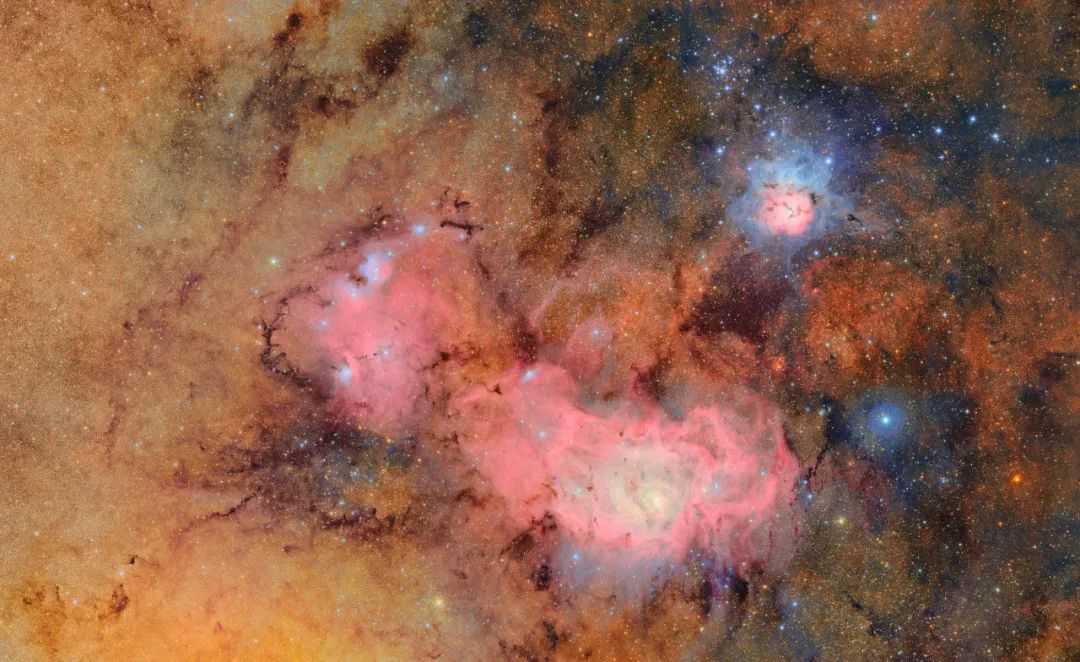
Astronomers have unveiled two groundbreaking images capturing the dynamic interplay of star formation and galaxy evolution. The first, a composite of the Trifid and Lagoon Nebulae, combines 678 individual exposures taken over just seven hours by the Vera C. Rubin Observatory’s 3.2-billion-pixel camera. This unprecedented resolution reveals intricate gas and dust structures in these stellar nurseries, where new stars are born from collapsing molecular clouds.

The Trifid and Lagoon Nebulae: Cosmic Laboratories of Star Birth

Located thousands of light-years away in Sagittarius, the Trifid and Lagoon Nebulae are iconic stellar nurseries where gravity sculpts gas and dust into glowing pillars and turbulent clouds12. Rubin’s telescopic "movie-like" imaging10, achieved through rapid-fire exposures and advanced data processing, resolves faint structures previously hidden. For instance, the nebulae’s pink hues stem from ionized hydrogen gas energized by newborn stars, while dark lanes of dense dust obscure protostars still forming deep within56.


The telescope’s 3200-megapixel camera, equivalent to 400 8K TVs, enables such precision1. By combining images across four filters, astronomers teased out subtle variations in temperature and chemical composition. This technical feat underscores Rubin’s role in shifting astronomy from static snapshots to dynamic, time-lapse studies of the universe210.

Virgo Cluster: A Theater of Galactic Mergers and Interactions

The Virgo Cluster image, part of Rubin’s test observations, offers a glimpse into the chaotic dance of galaxies. Three merging systems dominate the scene, their interactions triggering intense starbursts and creating tidal tails of gas and stars37. For example, one spiral galaxy pair (lower right) shows distorted arms, while a trio of merging ellipticals (upper right) exhibits shockwaves from colliding plasma110.


Foreground stars from the Milky Way add depth, appearing as bright pinpricks against the backdrop of distant clusters. These interactions are not isolated events: the Virgo Cluster’s gravity accelerates galaxies to thousands of kilometers per second, stripping gas through "ram pressure" and stifling star formation34. Such processes, observed here in vivid detail, provide clues to how galaxies evolve over billions of years.


Looking ahead, the James Webb Space Telescope will complement Rubin’s data by probing the nebulae’s infrared emissions to study protostars and exoplanetary disks9. Meanwhile, Rubin’s decade-long "Legacy Survey of Space and Time" will monitor 200 billion galaxies, capturing transient phenomena like supernovae and dark matter-driven lensing110. Together, these tools are rewriting our understanding of cosmic evolution—from the birth of stars in glowing nebulae to the cataclysmic mergers that reshape entire galaxies.
Latest Stories
Industry News1 minute readMicrosoft and the U.S. Idaho National Laboratory (INL) announced a partnership on July 16 to use AI in new nuclear plant licensing, aiming to drastically shorten the process. The move responds to Trump’s executive order to cut nuclear licensing to 18 months, addressing growing energy demands from AI data centers.
Astro Information2 minute readFor millennia, humanity has named the brightest stars, weaving their light into myths and calendars. Today, the International Astronomical Union (IAU) standardizes these names to unite global science, but each moniker still holds cultural treasures. Here’s a journey through the 25 brightest stars—by apparent magnitude—with their IAU-designated names and the stories behind them.
Health News1 minute readNestled in a sheltered bay on the eastern shore of Lake Geneva in Switzerland’s Vaud canton, the town of Montreux is framed by the snow-capped Alps, boasting breathtaking scenery. Long celebrated as a wellness retreat with a mild, pleasant climate, it covers 41 square kilometers and is home to around 23,000 residents—an idyllic small town known globally as a "mecca for beauty" and "capital of medical wellness."
Health News1 minute readSeattle-based global health organization PATH has launched Africa’s largest AI-driven medical research project in Kenya, aiming to test if AI can improve diagnosis and treatment decisions in resource-limited primary care settings. The study, based in Nairobi, has enrolled 9,000 participants.
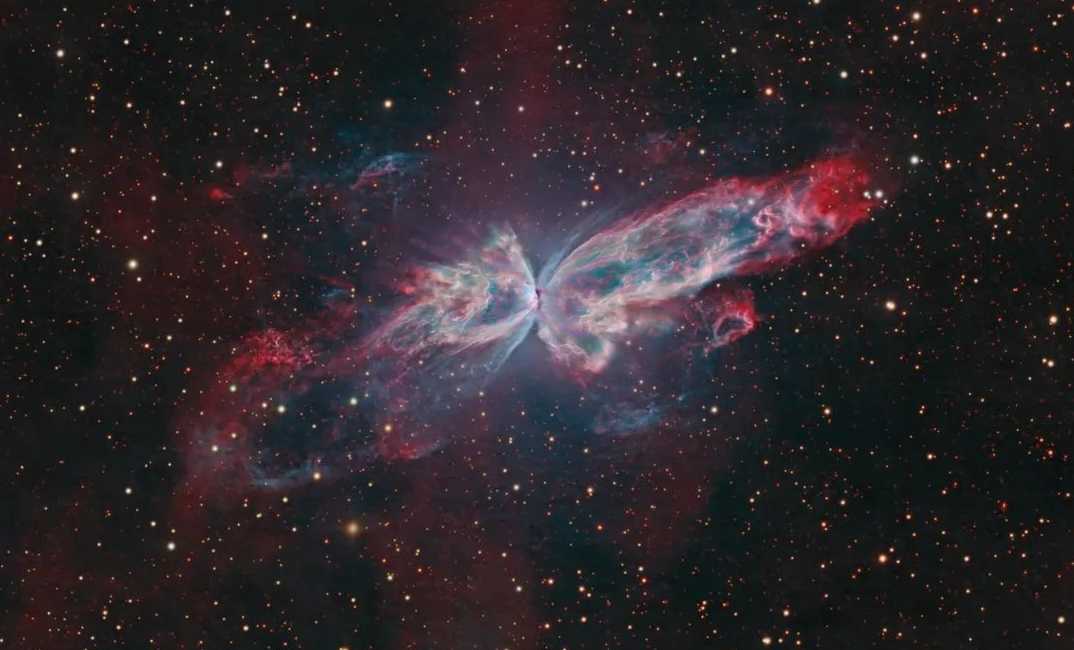
Astro Information1 minute readNGC 6302, a planetary nebula nicknamed the "Butterfly Nebula," lives up to its floral-insect moniker with wing-like gas plumes spanning 3 light-years. Located 4,000 light-years away in Scorpius, this stellar corpse showcases the dramatic final act of a massive star—now a 250,000°C central star evolving into a white dwarf, its ultraviolet radiation ionizing the surrounding nebula into a kaleidoscopic display.
Travel News2 minute readNestled beneath the natural limestone arch of Pont-d'Arc in France's Ardèche region, the Chauvet-Pont-d'Arc Cave (Grotte Chauvet-Pont-d'Arc) stands as a UNESCO World Heritage Site and one of humanity's most profound artistic treasures. This geological marvel shelters a trove of Paleolithic masterpieces that redefine our understanding of early human creativity.
Industry News1 minute readRecent leaked reports suggest that Apple's upcoming ultra-thin iPhone 17 Air will be equipped with a battery capacity of approximately 2,800 mAh, a figure that not only falls below the industry-standard 3,000 mAh threshold but also smaller than the battery capacities of all models in the current iPhone 16 series.