The Elusive Black - Capped Gnatcatcher: A Tiny Jewel of the Arid Southwest


Bird Information
The Elusive Black - Capped Gnatcatcher: A Tiny Jewel of the Arid Southwest

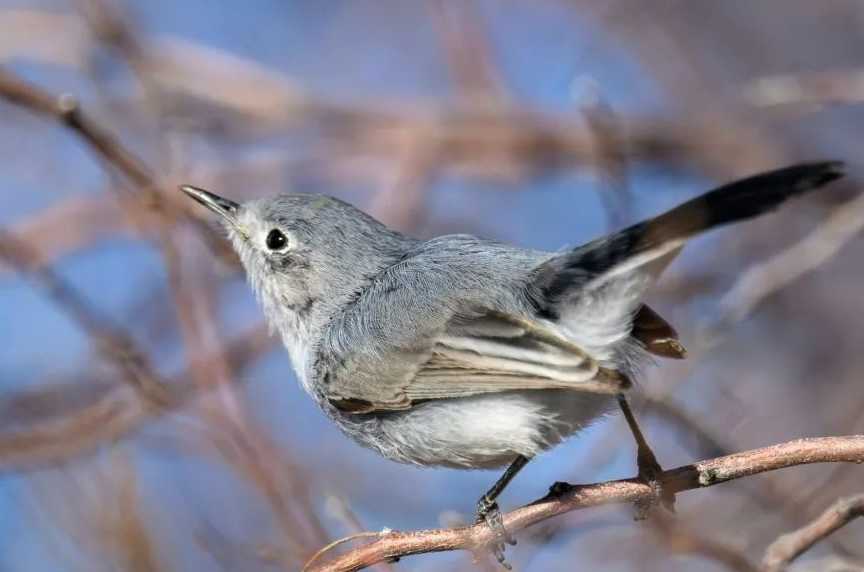
The Black - Capped Gnatcatcher (Polioptila nigriceps) is a diminutive yet captivating bird that has fascinated ornithologists and birdwatchers alike. Native to the arid regions of the southwestern United States and northwestern Mexico, this species stands out for its distinctive appearance and unique ecological niche.


Measuring a mere 10 - 12 centimeters in length, the Black - Capped Gnatcatcher is a small songbird. Males sport a striking black cap that contrasts sharply with their pale grayish - white faces, backs, and underparts. Their wings and tails are dark gray, with a faint white edging on the feathers, adding to their delicate charm. Females, while similar in overall shape, have a more subdued, brownish - gray cap, making them slightly less conspicuous. These tiny birds have slender bodies and long, narrow tails, which they often flick back and forth as they forage, giving them an animated and energetic appearance.


Inhabiting arid and semi - arid environments, the Black - Capped Gnatcatcher prefers thornscrub, mesquite bosques, and riparian woodlands. It is particularly associated with areas that have dense, low - lying vegetation, which provides ample cover and a rich source of its primary food: insects and spiders. Using its sharp eyesight and quick reflexes, it deftly snatches small invertebrates from leaves, branches, and even mid - air. During the breeding season, these gnatcatchers build intricate, cup - shaped nests. They construct these nests using fine plant fibers, spider silk, and bits of lichen, often attaching them to the outer branches of trees or shrubs. Females lay clutches of 2 - 3 tiny eggs, which they incubate for about two weeks. Both parents actively participate in feeding and protecting the chicks until they fledge.


Despite its adaptability to arid conditions, the Black - Capped Gnatcatcher faces threats. Habitat loss due to urban expansion, agriculture, and overgrazing has fragmented its populations. Invasive plant species also pose a challenge, altering the native vegetation that these birds rely on. Conservation efforts focused on preserving and restoring its preferred habitats are crucial for ensuring the survival of this enchanting species, allowing future generations to marvel at the beauty and agility of the Black - Capped Gnatcatcher in the wild.

Latest Stories
Bird Information1 minute readEndemic to New Guinea, the greater bird of paradise (Paradisaea apoda) belongs to the Paradisaeidae family, feasting on fruits and insects. So extraordinary is its beauty that 19th-century European naturalists doubted its existence, suspecting its vividly plumed specimens were fraudulent "mythical creatures."
Health News1 minute readSwitzerland has claimed the top spot in the latest European Health Consumer Index, solidifying its reputation as a leader in healthcare excellence across the continent.
Beauty News1 minute readMadrid-born freelance model Clara López, 27, has gained viral attention with a set of candid life photos captured across Barcelona’s cobblestone streets. The unposed series, shot by photographer friend Lucas Martínez, highlights López’s effortless elegance in everyday moments—from sipping coffee at a sidewalk café to browsing a vintage bookstore. Her 175cm frame, dressed in high-waisted jeans and oversized knit sweaters, blends seamlessly with the city’s bohemian vibe.
Travel News2 minute readNestled in the Vosges Mountains of Haute-Saône, France, the Plateau des Mille Etangs (Thousand Ponds Plateau) is emerging as a top destination for discerning hikers. Shaped by glaciers and human history, this 220 km² region boasts a surreal landscape of lakes, forests, and peat bogs, earning it the nickname "Little Finland" .
Health News1 minute readNestled in a sheltered bay on the eastern shore of Lake Geneva in Switzerland’s Vaud canton, the town of Montreux is framed by the snow-capped Alps, boasting breathtaking scenery. Long celebrated as a wellness retreat with a mild, pleasant climate, it covers 41 square kilometers and is home to around 23,000 residents—an idyllic small town known globally as a "mecca for beauty" and "capital of medical wellness."
Travel News2 minute readPerched on the banks of the Moselle River in Lorraine, France, the Cathédrale Saint-Étienne de Metz stands as a testament to Gothic grandeur and artistic innovation. With 6,500 square meters of stained glass—the largest expanse in France—it has earned the nickname “Lanterne du Bon Dieu” (God’s Lantern), captivating visitors with its ethereal glow and architectural brilliance.
Industry News1 minute readForeign media reported on July 15 that the European Commission has formally withdrawn its plan to impose a digital tax on major tech companies during the latest budget negotiations. The decision is seen as a key compromise in EU-U.S. trade talks, temporarily relieving U.S. tech giants like Apple and Meta from heavy tax pressures, while the EU paves the way for broader trade agreements by adjusting its fiscal strategy.