The Flame Nebula: Two Cosmic Identities for a Fiery Stellar Nursery


Astro Information
The Flame Nebula: Two Cosmic Identities for a Fiery Stellar Nursery

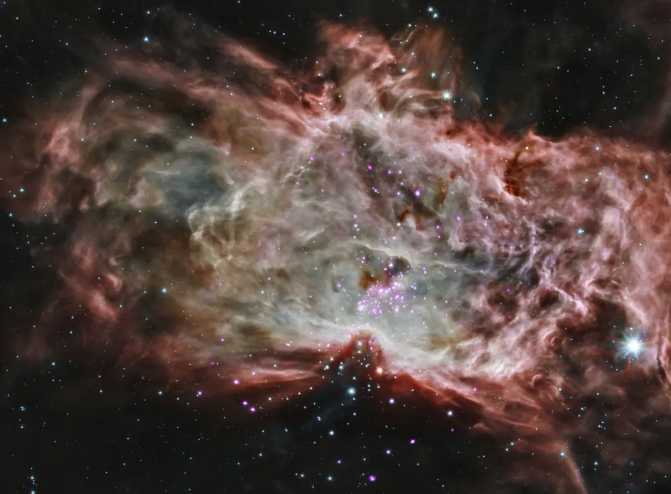
The Flame Nebula, a dramatic celestial inferno in the constellation Orion, goes by two official designations: NGC 2024 and Sh2-277. These identifiers trace back to historic astronomical catalogs that have shaped our understanding of the universe. While they represent the same glowing gas cloud, each number carries the legacy of the scientists and projects that first documented this cosmic wonder.


NGC 2024: A Legacy from the New General Catalogue

The designation NGC 2024 stems from the New General Catalogue (NGC), a monumental project compiled by Danish astronomer Johann Dreyer in 1888. Part of a three-volume work listing 7,840 celestial objects, the NGC aimed to consolidate observations from 18th- and 19th-century astronomers like William Herschel. Dreyer assigned NGC 2024 to the Flame Nebula based on its position in the sky (Right Ascension: 05h 41m 29s, Declination: -02° 19′ 38″), describing it as a "bright nebula with a star involved."
 
Source: Images from the Internet, if there is any infringement, please contact the removal of


This catalog became the gold standard for deep-sky objects, and today, NGC numbers remain synonymous with astronomical heritage. The Flame Nebula’s NGC entry reflects its status as a prominent emission nebula, ionized by the hot star Alnitak in Orion’s Belt, which illuminates the nebula’s fiery red hydrogen gas and dark dust lanes.

Sh2-277: Sharpless’ Vision for H II Regions

The alternative designation Sh2-277 comes from the Sharpless Catalog of H II Regions, published by American astronomer Stewart Sharpless in 1959. Focused exclusively on emission nebulae (H II regions) ionized by young stars, this catalog listed 317 objects across the Milky Way. Sharpless assigned Sh2-277 to the Flame Nebula, categorizing it by its hydrogen emission and spatial distribution.


Sharpless’ work emphasized the nebula’s role as a stellar nursery, highlighting its association with the Orion OB1 association— a group of massive, young stars that sculpt the nebula’s structure through their intense radiation and stellar winds. The Sh2-277 designation underscores the Flame Nebula’s scientific importance in studies of star formation and interstellar gas dynamics.

Why Two Names? The Evolution of Astronomical Cataloging

Astronomical objects often carry multiple designations because different catalogs prioritize various criteria:


  • NGC numbers are positional, based on visual observations from telescopes of the 1800s.
  • Sharpless numbers classify objects by physical properties (e.g., H II region emission).


For the Flame Nebula, both NGC 2024 and Sh2-277 serve as cosmic addresses, guiding astronomers to a region where new stars are born. While modern surveys like the Gaia mission have introduced new identifiers, the legacy of Dreyer and Sharpless lives on in these classic designations—reminders that every celestial object has a history as rich as the universe itself.


Today, telescopes like JWST peer into NGC 2024/Sh2-277 to study baby stars hidden within its dust clouds, proving that even a century after its cataloging, the Flame Nebula continues to ignite scientific curiosity.
Latest Stories
Health News1 minute readMeasles is an acute rash-causing respiratory infection caused by the measles virus. It spreads primarily through respiratory droplets and eye conjunctiva contact, making it one of the most contagious diseases. Typical symptoms include fever, runny nose, cough, tearing, photophobia, and maculopapular rashes. A small number of patients may develop complications such as pneumonia, laryngitis, otitis media, myocarditis, or encephalitis, with severe cases potentially leading to death.
Travel News2 minute readThe soul of Colmar lies in its half-timbered houses, dating back to the 16th century. These whimsical structures feature exposed wooden frames in geometric patterns, their facades painted in vibrant hues like buttercup yellow and sky blue. Flower-boxed windows and playful figurines adorn the facades, while their reflections dance on the Lauch River, creating the iconic Petite Venise (Little Venice) district. Here, fishermen pilot flower-decked boats, and riverside bistros serve Alsatian specialties like choucroute garnie, evoking scenes from Hayao Miyazaki’s Howl’s Moving Castle.
Health News1 minute readLocated in Pittsburgh, Pennsylvania, the UPMC Mercy Eye & Vision Rehabilitation Hospital spans 38,090 square meters. It integrates architectural design, engineering, interior design, landscape design, structural engineering, and sustainable design, earning it the 2023 Urban Land Institute (ULI) Healthier Places Award.
Health News1 minute readThough less internationally renowned, BNH Hospital stands as another top choice among Thailand’s international hospitals. As the country’s oldest private international hospital, it has served foreign patients longer than any other facility in the region.
Health News1 minute readNestled in a sheltered bay on the eastern shore of Lake Geneva in Switzerland’s Vaud canton, the town of Montreux is framed by the snow-capped Alps, boasting breathtaking scenery. Long celebrated as a wellness retreat with a mild, pleasant climate, it covers 41 square kilometers and is home to around 23,000 residents—an idyllic small town known globally as a "mecca for beauty" and "capital of medical wellness."
Astro Information2 minute readOn a clear, moonless night, a faint band stretches across the sky, gradually resolving into a luminous ribbon as eyes adjust to the dark. This is no ordinary sight: it’s the Milky Way, a grand projection of our galaxy’s 千亿 stars. The galactic plane arcs elegantly across the frame, flanked by the colorful Rho Ophiuchi Nebula on the right and the red-ringed Zeta Ophiuchi Nebula at the top center. Taken in late February from Mauna Kea, Hawaii, the image features the University of Hawaii’s 2.2-meter telescope in the foreground—though you don’t need a volcanic summit to witness this cosmic wonder.
Astro Information2 minute readA Sino-German research team led by the Yunnan Observatory of the Chinese Academy of Sciences has discovered a "super-Earth" orbiting a Sun-like star, marking a breakthrough in exoplanet detection. Named Kepler-725c, the planet has a mass 10 times that of Earth and resides in the habitable zone of its host star, where liquid water—and potentially life—could exist. The findings, published June 3 in Nature Astronomy, represent the first use of transit timing variation (TTV) inversion to identify such a planet in a Sun-like star’s habitable zone .