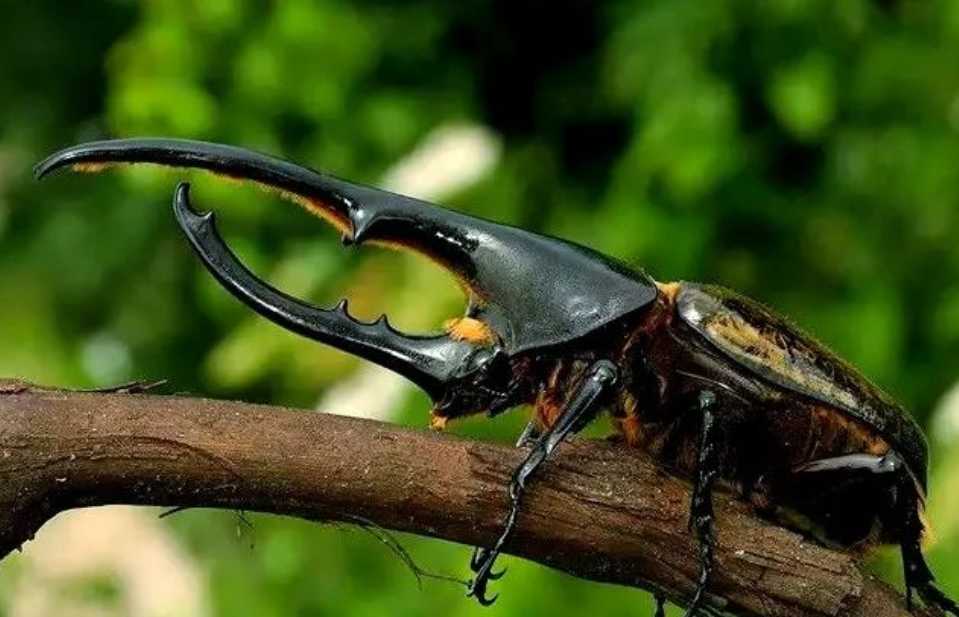
The Hercules beetle, Dynastes hercules, reigns as one of the longest beetles on Earth, captivating observers with its imposing size and extraordinary strength. Native to the rainforests of Central and South America, this scarab beetle earns its name from the mythological hero, boasting a pair of horns that define its iconic appearance and earned it the title "Hercules of the Insect World."
- Size and Horn Structure: Males can reach lengths of up to 17 centimeters, with the anterior horn accounting for nearly half of their body length. This Y-shaped horn is curved and ridged, evolved for ritual combat rather than feeding. Females, while smaller and hornless, have robust mandibles for excavating oviposition sites in decaying wood.
- Coloration: Their exoskeletons range from glossy black to deep green or brown, often with subtle iridescence. This pigmentation helps them blend into the rainforest floor, while the horns serve as both a display feature and a weapon.
- Astonishing Strength: Perhaps their most remarkable trait is their lifting capacity: they can carry objects up to 850 times their own body weight. To contextualize this, it’s the equivalent of a human lifting a truck—a feat enabled by specialized thoracic muscles and a sturdy exoskeletal structure.
- Habitat and Diet: Found in tropical rainforests from Mexico to Brazil, Hercules beetles thrive in humid, forested environments. Larvae feed on decaying wood and plant matter, acting as natural decomposers that enhance nutrient cycling. Adults primarily consume tree sap, fruit juices, and nectar.
- Mating Rituals: Male beetles use their horns in dramatic battles over females, locking horns and attempting to lift or toss rivals. These contests are rarely fatal but determine mating access, showcasing the evolutionary trade-off between size and agility.
- Life Cycle: Larvae spend 1–2 years in the soil, growing within rotting logs before pupating. Adults emerge for a brief life (2–3 months) focused solely on reproduction, embodying the rainforest’s strategy of rapid growth and reproduction.
- Symbol of Strength: In many indigenous cultures, the beetle’s might is revered, often appearing in folklore as a symbol of perseverance and power. In the pet trade, they are popular among insect enthusiasts for their striking appearance, though captive breeding has reduced pressure on wild populations.
- Threats and Protection: Deforestation and habitat loss pose risks to their survival, as they depend on mature forests for larval development. While not yet endangered, conservation efforts focus on preserving rainforest ecosystems and promoting sustainable logging practices.
The beetle’s exceptional strength and horn structure have inspired engineers and material scientists. Studies of their exoskeletal mechanics inform the design of lightweight, load-bearing structures in robotics and architecture. Additionally, their ability to thrive in nutrient-poor environments offers insights into sustainable decomposition processes, contributing to efforts in waste management and ecological restoration.
From its mythical namesake to its role as a rainforest keystone species, the Hercules beetle exemplifies nature’s ability to evolve both grandeur and functionality. As one of the insect world’s most iconic giants, it serves as a living testament to the wonders of adaptation—and a reminder of the fragile balance between human fascination and ecological preservation.