The Indigo Mosquito: South America’s Stunning yet Deadly Rainforest Jewel


Insect Information
The Indigo Mosquito: South America’s Stunning yet Deadly Rainforest Jewel

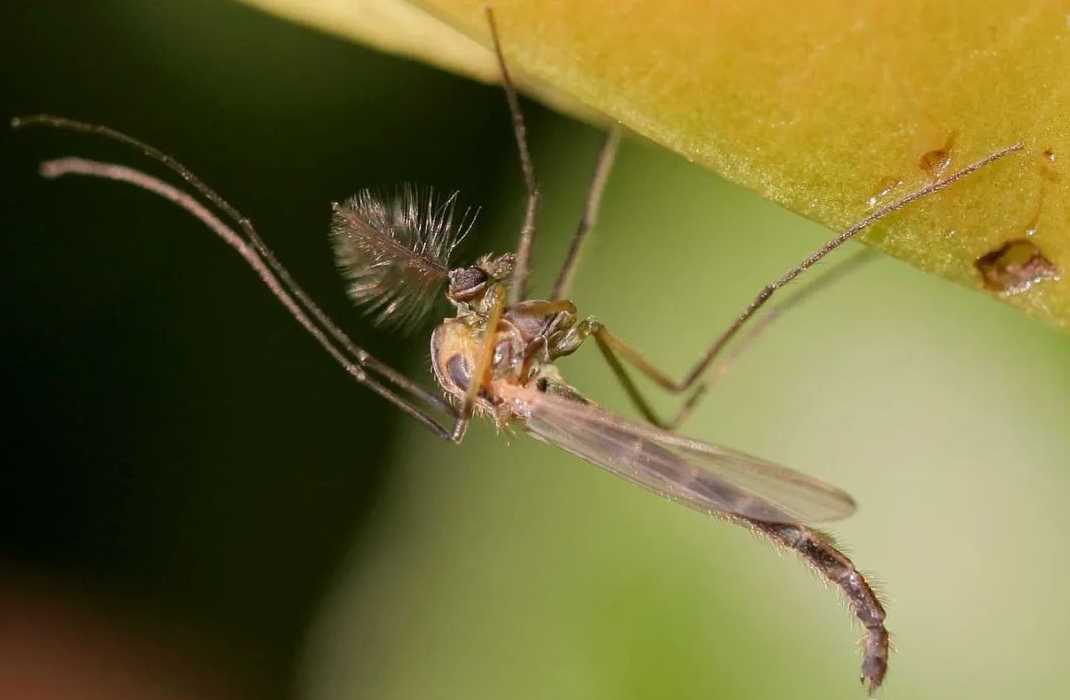
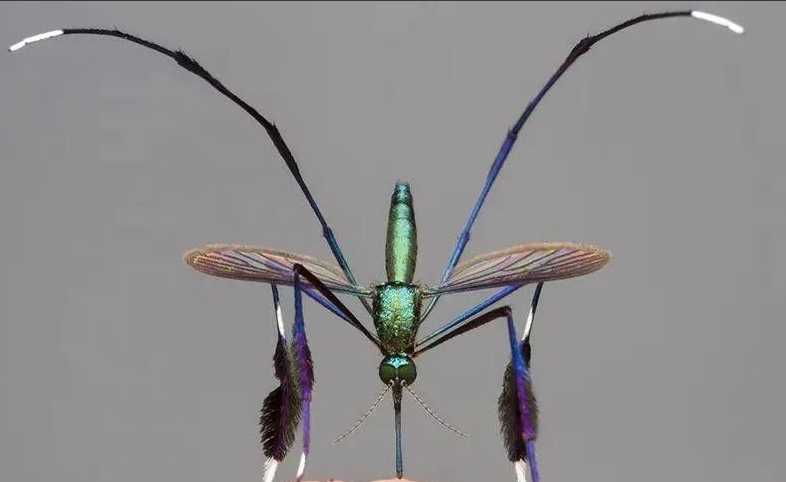
Regarded as the world’s most beautiful mosquito, the indigo mosquito (Sabethes cyaneus) mesmerizes with its iridescent metallic blue and purple hues, while its legs shimmer in feathery scales. Native to South America’s rainforests, this species’ dazzling appearance masks a dangerous reality: it’s a blood-sucking vector of yellow fever, blending aesthetic splendor with biological threat.

A Living Gem: Morphology and Adaptive Radiance

The indigo mosquito’s body shimmers with structural coloration, created by microscopic scales refracting light into vibrant blue, purple, and green tones—an effect rare in mosquitoes. Its most striking feature is the "feathery" hind legs, coated in dense, elongated scales resembling delicate plumes. These scales may aid mating displays or camouflage in rainforest foliage, though their exact function remains unclear.


Growing 8–10 mm, the species shows sexual dimorphism: females have piercing mouthparts for blood-feeding, while males rely on nectar. Unlike most mosquitoes, it has a robust build, adapted to navigating tropical forest understories.

Life Cycle and Dual Ecological Role

Larvae develop in water collected in tree holes or bromeliads, feeding on organic debris. Adults are diurnal, using vivid colors to attract mates. Females require blood meals to lay eggs, targeting mammals, birds, and humans—making them efficient yellow fever vectors. Historically, this has fueled epidemics across South America.


In rainforest ecosystems, the indigo mosquito serves as prey for spiders and amphibians while potentially aiding plant pollination through nectar feeding. This duality—pathogen spread and ecological contribution—highlights its complex role in tropical food webs.

Scientific Fascination and Public Health Imperatives

Entomologists study its iridescent scales for biomimicry insights, while public health experts monitor its behavior to curb yellow fever transmission. Though not endangered, its survival hinges on rainforest preservation. As with many tropical insects, it embodies nature’s paradox: beauty and danger coexisting within Earth’s most biodiverse ecosystems.
Latest Stories
Bird Information1 minute readEndemic to New Guinea, the greater bird of paradise (Paradisaea apoda) belongs to the Paradisaeidae family, feasting on fruits and insects. So extraordinary is its beauty that 19th-century European naturalists doubted its existence, suspecting its vividly plumed specimens were fraudulent "mythical creatures."
Health News1 minute readSwitzerland has claimed the top spot in the latest European Health Consumer Index, solidifying its reputation as a leader in healthcare excellence across the continent.
Beauty News1 minute readMadrid-born freelance model Clara López, 27, has gained viral attention with a set of candid life photos captured across Barcelona’s cobblestone streets. The unposed series, shot by photographer friend Lucas Martínez, highlights López’s effortless elegance in everyday moments—from sipping coffee at a sidewalk café to browsing a vintage bookstore. Her 175cm frame, dressed in high-waisted jeans and oversized knit sweaters, blends seamlessly with the city’s bohemian vibe.
Travel News2 minute readNestled in the Vosges Mountains of Haute-Saône, France, the Plateau des Mille Etangs (Thousand Ponds Plateau) is emerging as a top destination for discerning hikers. Shaped by glaciers and human history, this 220 km² region boasts a surreal landscape of lakes, forests, and peat bogs, earning it the nickname "Little Finland" .
Health News1 minute readNestled in a sheltered bay on the eastern shore of Lake Geneva in Switzerland’s Vaud canton, the town of Montreux is framed by the snow-capped Alps, boasting breathtaking scenery. Long celebrated as a wellness retreat with a mild, pleasant climate, it covers 41 square kilometers and is home to around 23,000 residents—an idyllic small town known globally as a "mecca for beauty" and "capital of medical wellness."
Travel News2 minute readPerched on the banks of the Moselle River in Lorraine, France, the Cathédrale Saint-Étienne de Metz stands as a testament to Gothic grandeur and artistic innovation. With 6,500 square meters of stained glass—the largest expanse in France—it has earned the nickname “Lanterne du Bon Dieu” (God’s Lantern), captivating visitors with its ethereal glow and architectural brilliance.
Industry News1 minute readForeign media reported on July 15 that the European Commission has formally withdrawn its plan to impose a digital tax on major tech companies during the latest budget negotiations. The decision is seen as a key compromise in EU-U.S. trade talks, temporarily relieving U.S. tech giants like Apple and Meta from heavy tax pressures, while the EU paves the way for broader trade agreements by adjusting its fiscal strategy.