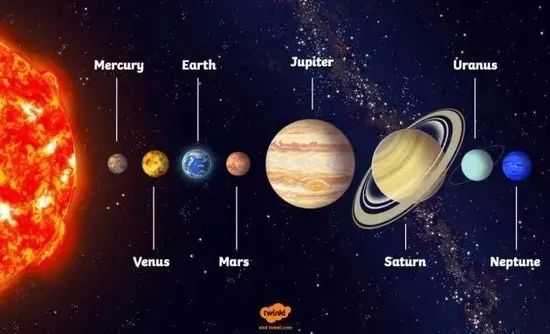
While the solar system is home to just eight planets, they are remarkably diverse, categorized into three distinct groups based on composition and structure. This classification—terrestrial planets, gas giants, and ice giants—reveals the dynamic processes that shaped their formation and highlights the vast range of environments within our cosmic neighborhood.
Terrestrial Planets: Mercury, Venus, Earth, and Mars
The innermost planets—Mercury, Venus, Earth, and Mars—are rocky worlds with solid surfaces, composed primarily of silicate rocks and metals. Mercury, the smallest and closest to the Sun, is a heavily cratered sphere with a thin atmosphere, while Venus boasts a thick, toxic atmosphere that traps heat in a runaway greenhouse effect. Earth, the only known planet to support life, features a dynamic crust, liquid water, and a protective magnetic field. Mars, the "Red Planet," has a thin atmosphere and evidence of ancient rivers, making it a focus for astrobiology. These planets are relatively small (Earth is the largest at 12,742 km in diameter) and have short orbital periods, reflecting their proximity to the Sun.
The innermost planets—Mercury, Venus, Earth, and Mars—are rocky worlds with solid surfaces, composed primarily of silicate rocks and metals. Mercury, the smallest and closest to the Sun, is a heavily cratered sphere with a thin atmosphere, while Venus boasts a thick, toxic atmosphere that traps heat in a runaway greenhouse effect. Earth, the only known planet to support life, features a dynamic crust, liquid water, and a protective magnetic field. Mars, the "Red Planet," has a thin atmosphere and evidence of ancient rivers, making it a focus for astrobiology. These planets are relatively small (Earth is the largest at 12,742 km in diameter) and have short orbital periods, reflecting their proximity to the Sun.
Gas Giants: Jupiter and Saturn
Jupiter and Saturn dominate the solar system’s mid-region, classified as gas giants due to their massive size and lack of solid surfaces. Jupiter, the largest planet, is a swirling mass of hydrogen and helium, with iconic features like the Great Red Spot, a centuries-old storm larger than Earth. Saturn, famous for its dazzling ring system, shares a similar composition but is distinguished by its icy rings and numerous moons, including Titan, with its Earth-like nitrogen atmosphere. Both planets have thick metallic hydrogen cores and powerful magnetic fields, with Jupiter’s magnetosphere spanning millions of kilometers. Their enormous gravity influences the orbits of comets and asteroids, acting as cosmic guardians of the inner solar system.
Jupiter and Saturn dominate the solar system’s mid-region, classified as gas giants due to their massive size and lack of solid surfaces. Jupiter, the largest planet, is a swirling mass of hydrogen and helium, with iconic features like the Great Red Spot, a centuries-old storm larger than Earth. Saturn, famous for its dazzling ring system, shares a similar composition but is distinguished by its icy rings and numerous moons, including Titan, with its Earth-like nitrogen atmosphere. Both planets have thick metallic hydrogen cores and powerful magnetic fields, with Jupiter’s magnetosphere spanning millions of kilometers. Their enormous gravity influences the orbits of comets and asteroids, acting as cosmic guardians of the inner solar system.
Ice Giants: Uranus and Neptune
Orbiting in the solar system’s distant reaches, Uranus and Neptune are termed ice giants, distinguished by their composition of "ices"—mixtures of water, ammonia, and methane—alongside hydrogen and helium. Uranus, tilted on its side due to a probable ancient collision, has a pale blue hue from methane in its atmosphere and a faint ring system. Neptune, the farthest major planet, features supersonic winds and the dark, stormy Great Dark Spot, with its largest moon, Triton, an icy world with active cryovolcanoes. Unlike gas giants, ice giants have smaller hydrogen-helium envelopes and larger icy mantles, making them unique intermediaries between rocky planets and the Sun’s gas-dominated behemoths.
Orbiting in the solar system’s distant reaches, Uranus and Neptune are termed ice giants, distinguished by their composition of "ices"—mixtures of water, ammonia, and methane—alongside hydrogen and helium. Uranus, tilted on its side due to a probable ancient collision, has a pale blue hue from methane in its atmosphere and a faint ring system. Neptune, the farthest major planet, features supersonic winds and the dark, stormy Great Dark Spot, with its largest moon, Triton, an icy world with active cryovolcanoes. Unlike gas giants, ice giants have smaller hydrogen-helium envelopes and larger icy mantles, making them unique intermediaries between rocky planets and the Sun’s gas-dominated behemoths.
This tripartite classification of the solar system’s planets not only organizes them by physical traits but also underscores the diversity of planetary formation. From the scorched rocks of the inner system to the icy, wind-swept giants of the outer reaches, each group tells a story of gravitational forces, cosmic collisions, and the slow accumulation of matter around a young star. As missions like NASA’s Juno and ESA’s JUICE explore these worlds, they deepen our understanding of how planets evolve and why our solar system is a unique haven of life in the cosmos.