The Stunning Vermilion Flycatcher: A Fiery - Hued Avian Delight


Bird Information
The Stunning Vermilion Flycatcher: A Fiery - Hued Avian Delight

The Vermilion Flycatcher (Pyrocephalus obscurus) is a captivating small bird that has enamored birdwatchers and nature enthusiasts alike. With its vivid plumage and fascinating behaviors, it stands out in the avian world.


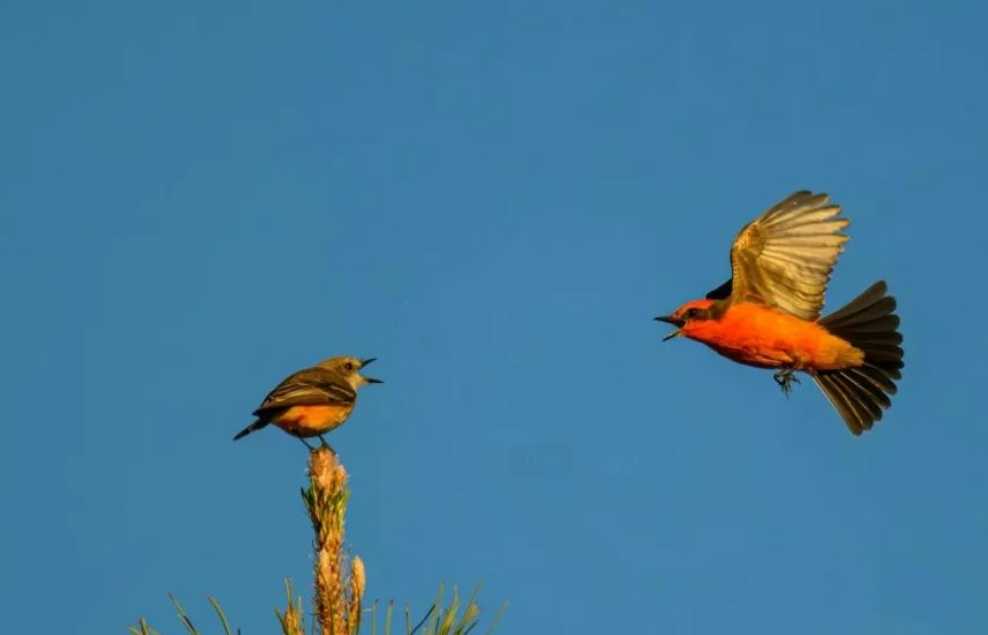
Measuring around 13 - 15 centimeters in length, male Vermilion Flycatchers are a sight to behold. Their plumage is a brilliant vermilion red, except for their brownish - black backs. A bold black mask around their eyes adds to their allure. In contrast, females have a more understated appearance. They sport olive - brown upperparts and pale yellow - orange underparts, with a slightly paler throat. This color difference between the sexes is a common feature in many bird species and helps with various aspects of their survival, from camouflage during nesting for females to attracting mates for males.


These flycatchers are widely distributed across the Americas. They can be found in a range of habitats, from the arid deserts and semi - open woodlands of the southwestern United States and Mexico to the tropical and subtropical regions of Central and South America. They show a preference for habitats near water sources, such as riverbanks, where there is an abundance of insects, their primary food source. They are highly skilled at aerial hunting, perching on low branches or wires, patiently waiting for an insect to pass by, and then swiftly darting out to catch it mid - air with their small, but sharp - beaked bills.


During the breeding season, male Vermilion Flycatchers put on elaborate displays to attract females. They perform acrobatic flights, fluttering their wings and showing off their bright plumage. Females build cup - shaped nests using twigs, grass, and other plant materials, often in the forks of trees or shrubs. They usually lay 2 - 3 eggs, which are incubated for about two weeks. Both parents take turns feeding the chicks a diet mainly consisting of insects until they are ready to fledge, which is typically around 15 days after hatching. Despite facing some threats such as habitat loss due to urbanization and agricultural expansion, the Vermilion Flycatcher's wide distribution and adaptability have helped maintain its population, allowing it to continue gracing the skies of the Americas with its fiery presence.

Latest Stories
Industry News1 minute readMicrosoft and the U.S. Idaho National Laboratory (INL) announced a partnership on July 16 to use AI in new nuclear plant licensing, aiming to drastically shorten the process. The move responds to Trump’s executive order to cut nuclear licensing to 18 months, addressing growing energy demands from AI data centers.
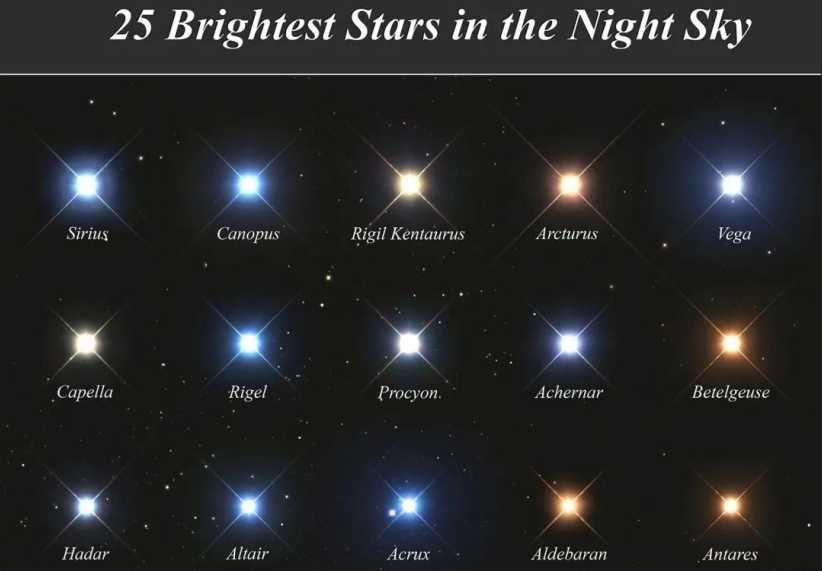
Astro Information2 minute readFor millennia, humanity has named the brightest stars, weaving their light into myths and calendars. Today, the International Astronomical Union (IAU) standardizes these names to unite global science, but each moniker still holds cultural treasures. Here’s a journey through the 25 brightest stars—by apparent magnitude—with their IAU-designated names and the stories behind them.
Health News1 minute readNestled in a sheltered bay on the eastern shore of Lake Geneva in Switzerland’s Vaud canton, the town of Montreux is framed by the snow-capped Alps, boasting breathtaking scenery. Long celebrated as a wellness retreat with a mild, pleasant climate, it covers 41 square kilometers and is home to around 23,000 residents—an idyllic small town known globally as a "mecca for beauty" and "capital of medical wellness."
Health News1 minute readSeattle-based global health organization PATH has launched Africa’s largest AI-driven medical research project in Kenya, aiming to test if AI can improve diagnosis and treatment decisions in resource-limited primary care settings. The study, based in Nairobi, has enrolled 9,000 participants.
Astro Information1 minute readNGC 6302, a planetary nebula nicknamed the "Butterfly Nebula," lives up to its floral-insect moniker with wing-like gas plumes spanning 3 light-years. Located 4,000 light-years away in Scorpius, this stellar corpse showcases the dramatic final act of a massive star—now a 250,000°C central star evolving into a white dwarf, its ultraviolet radiation ionizing the surrounding nebula into a kaleidoscopic display.
Travel News2 minute readNestled beneath the natural limestone arch of Pont-d'Arc in France's Ardèche region, the Chauvet-Pont-d'Arc Cave (Grotte Chauvet-Pont-d'Arc) stands as a UNESCO World Heritage Site and one of humanity's most profound artistic treasures. This geological marvel shelters a trove of Paleolithic masterpieces that redefine our understanding of early human creativity.
Industry News1 minute readRecent leaked reports suggest that Apple's upcoming ultra-thin iPhone 17 Air will be equipped with a battery capacity of approximately 2,800 mAh, a figure that not only falls below the industry-standard 3,000 mAh threshold but also smaller than the battery capacities of all models in the current iPhone 16 series.