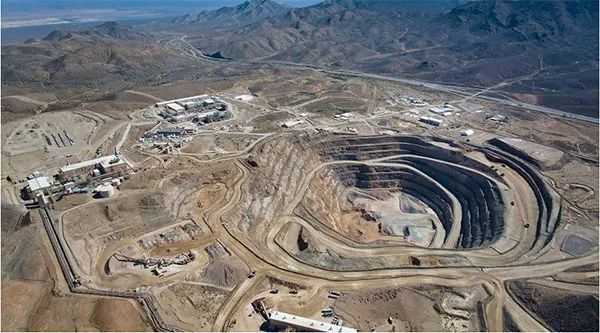
The U.S. Department of Defense (DoD) has taken a historic step by acquiring a 15% stake in MP Materials through a $400 million preferred stock purchase, making it the largest shareholder of the U.S.-based rare earth producer . This move aims to address critical national security vulnerabilities by reducing reliance on foreign (particularly Chinese) rare earth supplies, which are essential for advanced military systems, electric vehicles, and renewable energy technologies.
Key Details of the Partnership
-
Strategic Facility Expansion:
MP Materials, operator of the only active rare earth mine in the U.S. (Mountain Pass, California), will use the funding to build a second domestic rare earth magnet manufacturing plant. Named "10X," this facility is scheduled to begin operations in 2028 with an annual capacity of 10,000 tons of rare earth magnets—equivalent to the U.S. military’s total annual demand . The DoD has committed to 100% off-take of the plant’s output for 10 years, ensuring stable demand for defense and commercial applications . -
Price Stability Mechanism:
To mitigate market volatility, the DoD has established a **$110/kg floor price** for neodymium-praseodymium (NdPr) oxide, a critical rare earth compound used in permanent magnets. If market prices drop below this threshold, the government will compensate MP Materials quarterly. Conversely, if prices exceed $110/kg, the DoD will receive 30% of the excess profits . This innovative model balances risk-sharing and incentivizes private investment in a sector historically destabilized by China’s low-cost pricing strategies. -
Private Sector Collaboration:
Beyond government support, MP Materials has secured **$10 billion in financing** from JPMorgan and Goldman Sachs for plant construction . Tech giants like Apple have also invested $500 million to secure recycled rare earth magnet supplies, underscoring the strategic importance of diversifying supply chains .
Strategic Implications for U.S. National Security
-
Reducing Chinese Dependency:
The U.S. currently imports 70% of its rare earths from China, including 100% of heavy rare earths (e.g., dysprosium) critical for advanced weaponry like F-35 fighter jets and guided missiles . China’s April 2025 export restrictions on medium-heavy rare earths further accelerated U.S. efforts to reshore production. -
Techno-Industrial Competition:
The partnership exemplifies a new paradigm of public-private collaboration to counter China’s "state capitalism." By combining DoD funding with private-sector expertise, the U.S. aims to replicate China’s vertically integrated rare earth supply chain—a model that has dominated global markets for decades . -
Global Market Ripple Effects:
The $110/kg NdPr floor price—nearly double the current market rate ($63/kg)—could disrupt China’s pricing dominance. Analysts predict this benchmark may become a "gravitational center" for global rare earth pricing, potentially raising costs for downstream industries like electric vehicles but safeguarding long-term supply security .
Challenges and Risks Ahead
-
Technical and Operational Hurdles:
U.S. rare earth processing costs remain 10 times higher than China’s due to outdated refining technologies and stringent environmental regulations. For instance, MP Materials’ Mountain Pass mine still ships raw ore to China for processing, creating an unintended dependency loop 12. The new plant’s 2028 target date also faces delays from workforce shortages and regulatory bottlenecks. -
Heavy Rare Earth Shortfall:
While MP Materials’ new plant focuses on light rare earths (e.g., NdPr), the U.S. lacks domestic sources of heavy rare earths. This gap could leave the military vulnerable, as systems like naval sonar and missile guidance rely on dysprosium and terbium—materials China currently controls . -
Geopolitical Backlash:
China may retaliate by restricting exports of other critical materials or ramping up investment in global rare earth projects (e.g., in Myanmar, Vietnam). Meanwhile, U.S. allies like Japan and Germany have expressed concerns about rising rare earth costs impacting their own industries .
Market and Financial Reactions
MP Materials’ stock surged 50% following the announcement, adding $2.5 billion to its market cap . Investors view the DoD partnership as a de facto "government bailout" for a company that lost $65.4 million in 2024 due to Chinese price competition . However, long-term viability hinges on scaling production while maintaining cost competitiveness—a challenge exacerbated by China’s continued technological advancements (e.g., grain boundary diffusion techniques reducing heavy rare earth usage) .
Conclusion
The DoD’s investment in MP Materials marks a pivotal shift in U.S. industrial policy, blending strategic state intervention with private-sector innovation. While the initiative addresses immediate national security needs, overcoming technical, cost, and geopolitical barriers will require sustained commitment over decades. As one analyst noted, "This is not just about rare earths—it’s about redefining how democracies compete with authoritarian systems in 21st-century critical industries" . The outcome will shape not only the global rare earth market but also broader U.S.-China techno-economic rivalry.