Vercors Plateau: France’s Majestic Natural Fortress Carved by Time and Resistance


Travel News
Vercors Plateau: France’s Majestic Natural Fortress Carved by Time and Resistance

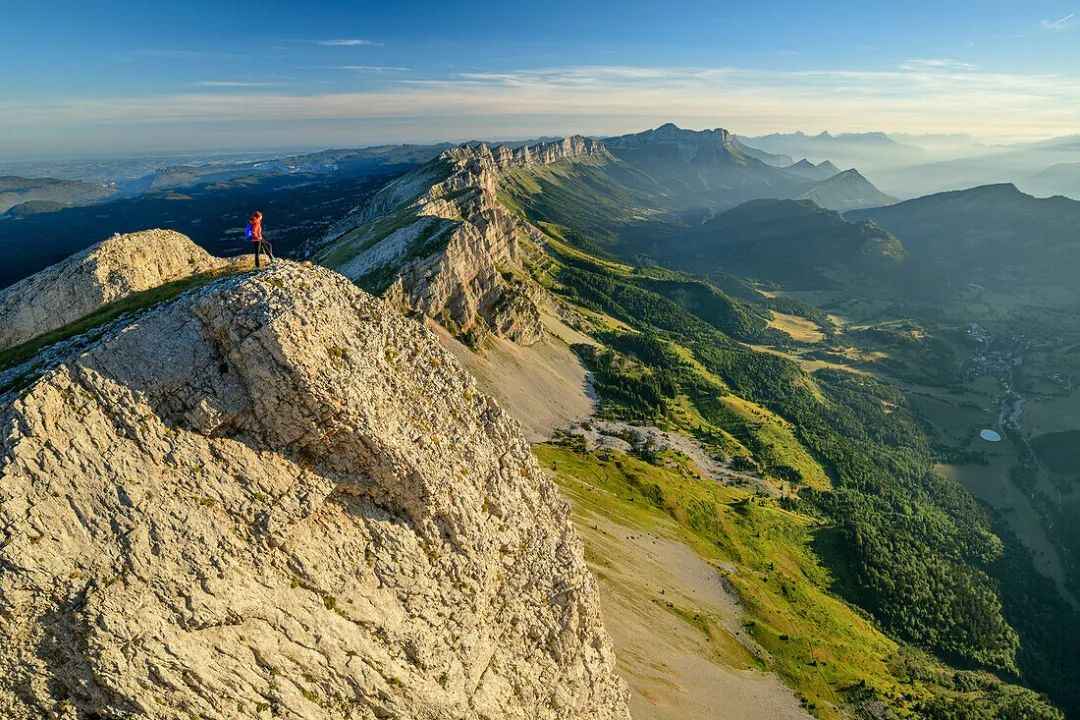
Nestled in the French Pre-Alps, the Plateau du Vercors stands as a testament to nature’s raw power and humanity’s indomitable spirit. Rising abruptly from the valleys of Isère, this limestone plateau—dominated by peaks like Grand Veymont (2,346 meters)—features sheer cliffs and labyrinthine gorges that earned it the nickname "the Natural Great Wall". Its dramatic landscapes, shaped over millennia by erosion, have not only sculpted a geological marvel but also forged a theater of historical significance.

Nestled in the French Pre-Alps, the Plateau du Vercors stands as a testament to nature’s raw power and humanity’s indomitable spirit. Rising abruptly from the valleys of Isère, this limestone plateau—dominated by peaks like Grand Veymont (2,346 meters)—features sheer cliffs and labyrinthine gorges that earned it the nickname "the Natural Great Wall". Its dramatic landscapes, shaped over millennia by erosion, have not only sculpted a geological marvel but also forged a theater of historical significance.

A Geological Masterpiece

The Vercors Plateau’s jagged escarpments and windswept plateaus are the result of millions of years of limestone erosion. The eastern edge, overlooking Grenoble, forms a near-vertical wall up to 700 meters high, creating a natural defensive barrier. This terrain, once a seabed, now hosts unique ecosystems, including alpine meadows and ancient forests, protected within the Vercors Regional Nature Park. Hikers and climbers flock to landmarks like Mont Aiguille ("Needle Mountain"), a striking rock formation offering panoramic views of the Alps.

A Battlefield of Freedom

During World War II, the Vercors became a symbol of resistance. In June 1944, French Maquis fighters declared the "Republic of Vercors," establishing the first liberated territory in France under Nazi occupation. Their bold stand attracted international attention, but when Allied reinforcements failed to arrive, the plateau faced a brutal German offensive. On July 23, 1944, German paratroopers and glider-borne troops descended, destroying villages like Valchevrière and massacring civilians. Despite overwhelming odds, the Maquis held out for six weeks, delaying German forces en route to Normandy. Their sacrifice, immortalized in historical accounts, remains a poignant chapter in France’s fight for freedom.

A Playground for Adventurers

Today, the Vercors invites visitors to explore its rugged beauty. The nature park offers year-round activities: cross-country skiing on winter’s snow-cloaked plateaus, rock climbing on limestone cliffs, and hiking trails that wind through forests and past hidden caves. The "Balcony Roads"—dramatic cliffside routes—provide access to viewpoints like the Belvédère de la Maline, where the sheer drop and sweeping vistas leave travelers breathless. Historical sites, such as the ruins of Valchevrière and the Grotte de la Luire (a WWII hospital cave), add layers of meaning to outdoor excursions.

When to Visit

The best time to experience the Vercors is from June to September, when mild temperatures and clear skies enhance hiking and sightseeing. Spring (April–May) brings blooming meadows, while autumn (October–November) paints the forests in vibrant hues. Winter transforms the plateau into a snowy haven for skiers and snowshoers.


From its awe-inspiring cliffs to its heroic past, the Vercors Plateau embodies the fusion of nature’s grandeur and human resilience. It’s not just a landscape—it’s a living story, etched into stone for eternity.

Latest Stories
Health News1 minute readMeasles is an acute rash-causing respiratory infection caused by the measles virus. It spreads primarily through respiratory droplets and eye conjunctiva contact, making it one of the most contagious diseases. Typical symptoms include fever, runny nose, cough, tearing, photophobia, and maculopapular rashes. A small number of patients may develop complications such as pneumonia, laryngitis, otitis media, myocarditis, or encephalitis, with severe cases potentially leading to death.
Travel News2 minute readThe soul of Colmar lies in its half-timbered houses, dating back to the 16th century. These whimsical structures feature exposed wooden frames in geometric patterns, their facades painted in vibrant hues like buttercup yellow and sky blue. Flower-boxed windows and playful figurines adorn the facades, while their reflections dance on the Lauch River, creating the iconic Petite Venise (Little Venice) district. Here, fishermen pilot flower-decked boats, and riverside bistros serve Alsatian specialties like choucroute garnie, evoking scenes from Hayao Miyazaki’s Howl’s Moving Castle.
Health News1 minute readLocated in Pittsburgh, Pennsylvania, the UPMC Mercy Eye & Vision Rehabilitation Hospital spans 38,090 square meters. It integrates architectural design, engineering, interior design, landscape design, structural engineering, and sustainable design, earning it the 2023 Urban Land Institute (ULI) Healthier Places Award.
Health News1 minute readThough less internationally renowned, BNH Hospital stands as another top choice among Thailand’s international hospitals. As the country’s oldest private international hospital, it has served foreign patients longer than any other facility in the region.
Health News1 minute readNestled in a sheltered bay on the eastern shore of Lake Geneva in Switzerland’s Vaud canton, the town of Montreux is framed by the snow-capped Alps, boasting breathtaking scenery. Long celebrated as a wellness retreat with a mild, pleasant climate, it covers 41 square kilometers and is home to around 23,000 residents—an idyllic small town known globally as a "mecca for beauty" and "capital of medical wellness."
Astro Information2 minute readOn a clear, moonless night, a faint band stretches across the sky, gradually resolving into a luminous ribbon as eyes adjust to the dark. This is no ordinary sight: it’s the Milky Way, a grand projection of our galaxy’s 千亿 stars. The galactic plane arcs elegantly across the frame, flanked by the colorful Rho Ophiuchi Nebula on the right and the red-ringed Zeta Ophiuchi Nebula at the top center. Taken in late February from Mauna Kea, Hawaii, the image features the University of Hawaii’s 2.2-meter telescope in the foreground—though you don’t need a volcanic summit to witness this cosmic wonder.
Astro Information2 minute readA Sino-German research team led by the Yunnan Observatory of the Chinese Academy of Sciences has discovered a "super-Earth" orbiting a Sun-like star, marking a breakthrough in exoplanet detection. Named Kepler-725c, the planet has a mass 10 times that of Earth and resides in the habitable zone of its host star, where liquid water—and potentially life—could exist. The findings, published June 3 in Nature Astronomy, represent the first use of transit timing variation (TTV) inversion to identify such a planet in a Sun-like star’s habitable zone .